

Furniture Knowledge
Modern Italian Furniture: Style, Materials & What Defines It
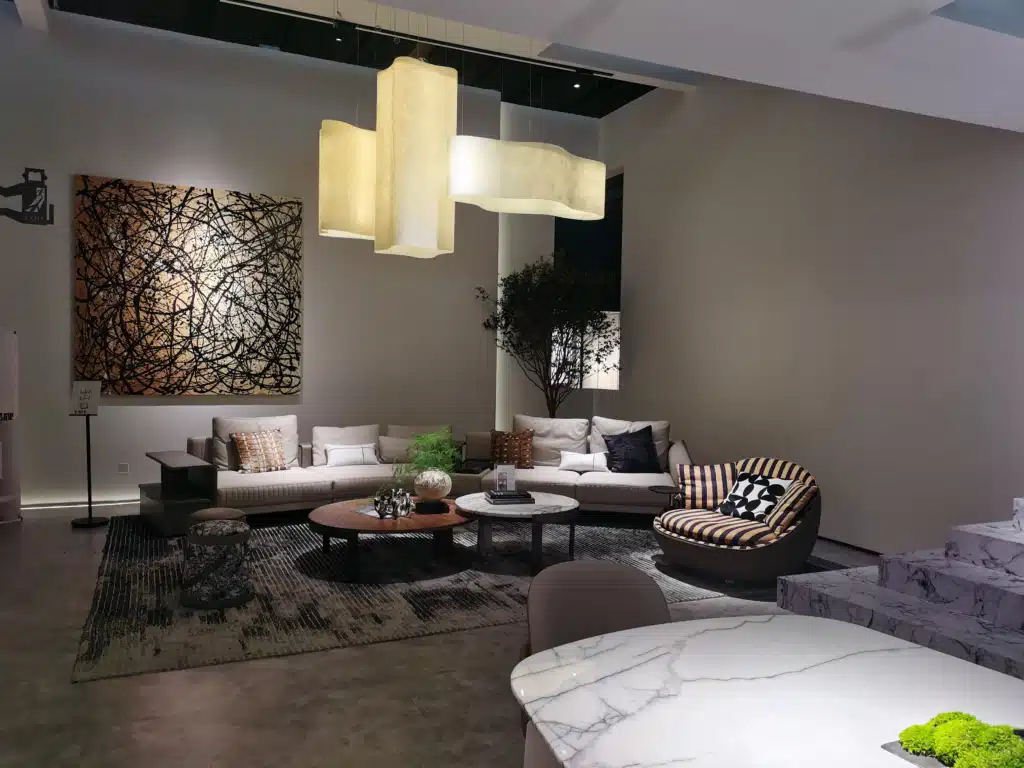
Walk through any high-end residential project, boutique hotel lobby, or luxury real estate staging, and you will encounter modern Italian furniture: low-profile seating in top-grain leather, a marble dining table with brass legs, clean silhouettes that feel warm rather than cold. Everyone calls it "Italian." Very few people can explain what that actually means.
The phrase "modern Italian furniture" gets applied to everything from genuine Cassina pieces to mass-market sofas with vaguely European-sounding names. That gap between the label and the reality matters, especially when you are specifying pieces for a client or commissioning something custom. Understanding what the aesthetic actually is, where it came from, and what execution looks like at its best gives you a sharper eye and better decisions.
Some manufacturers have studied this design language so closely they can deliver it with factory-level precision, executing the same material principles and proportional logic that define the Italian tradition, regardless of where they operate. Kalyste, a Foshan-based luxury furniture maker, is one example of that model in practice.
What Actually Defines the Modern Italian Furniture Aesthetic?
Modern Italian furniture is not minimalist for minimalism's sake. It is also not ornate in the way traditional European furniture tends to be. The defining tension is sculptural form held in check by clean discipline: every curve, every material contrast, every proportion decision is deliberate. Nothing is added because it looks good in isolation. Everything serves the whole.
The visual logic relies on balanced proportions, deliberate negative space, and refined material pairings. A sofa sits low, its seat depth generous, its armrests tapered rather than padded into bulk. A dining table in natural marble sits on slender brass legs, the visual weight distributed so the heaviness of the stone reads as elegance rather than mass. That calibration is the work.
Restraint became Italy's design signature through a specific cultural shift. After World War II, Italian designers moved away from ornament-heavy neoclassical roots and toward something that was functional without being cold, luxurious without being excessive. The Milan design scene, anchored by the Salone del Mobile, built a global reputation around this idea: that everyday objects, made with enough intelligence and craft, become design statements. That philosophy is what contemporary Italian furniture still carries.
Modern Italian furniture: signature materials
Marble
Natural marble became the face of Italian luxury furniture for reasons that go beyond aesthetics. Every slab is unique. The veining, the color shifts, the surface depth cannot be replicated because they are geological, not manufactured. In furniture construction, especially for dining tables, coffee tables, and side tables, that variation is a feature. No two marble pieces look identical, which is exactly what clients paying for custom work expect.
The difference between natural marble and engineered stone is immediately apparent to anyone who knows what to look for. Engineered stone is consistent, uniform, and flat in its visual character. Natural marble has depth. Light moves through its surface differently depending on the thickness of the slab and the density of the mineral veining. For a dining table that anchors a room, that difference is not subtle.
Brass and metal finishes
Brass inlays, bronzed frames, and polished metal legs create the warm material contrast that separates the Italian aesthetic from Scandinavian or industrial design traditions. In quality Italian-inspired pieces, metal serves double duty: structural and decorative at once. The quality of metal finishing is one of the fastest ways to distinguish a genuine piece from an imitation. Solid brass develops a patina over time; thin plating over base metal chips, flakes, and looks flat within a few years.
Leather and Upholstery
Top-grain leather and high-quality fabric upholstery complete the material story, particularly in modern Italian sofas and seating. Leather is chosen not just for durability but for its visual tone. The color, the hand of the hide, and the precision of the stitching all contribute to the overall character of the piece. A sofa in the right shade of cognac or slate-gray leather, with hand-sewn seams and solid cushion support, reads entirely differently from the same silhouette covered in bonded leather.
The design movements that built the style
Italian Rationalism, which took shape in the 1920s and deepened through the 1930s, established the foundation: functional, geometric forms with architectural clarity. It borrowed from modernism broadly but applied the Italian emphasis on craft. What followed in the 1960s and 1970s was almost its opposite. Radical Design rejected pure functionalism and treated furniture as a conceptual object. Pieces became provocative, anti-decorative, experimental. The tension between these two impulses, discipline versus drama, is what defined Italian designer furniture as a category.
The Memphis Group, founded in 1981 by Ettore Sottsass, pushed the drama further: bright colors, exaggerated geometric shapes, unconventional material combinations. Memphis was short-lived as a movement, but its influence on how Italian designers think about material contrast and sculptural form endures. It gave contemporary Italian furniture its permission to be bold even while restrained.
Gio Ponti's mid-century work is another thread buyers recognize today, often without knowing it. His furniture combined slender structural elegance with warmth, a signature that runs through what brands like B&B Italia, Poliform, and Minotti represent now. Post-2000, the Italian furniture industry moved toward quieter luxury: fewer decorative gestures, tighter proportions, higher material quality. That is the lineage most people are referencing when they say "modern Italian furniture."
How Italian style stands apart from other European furniture traditions
Scandinavian design and modern Italian design are both minimal, but they arrive at minimalism from different starting points. Scandinavian furniture prioritizes functional minimalism, light woods, and design accessible to most households. Italian design prioritizes sculptural intent, material luxury, and visual warmth, even in restrained pieces. The materials tell the difference immediately: marble and brass versus birch and linen.
French furniture modernism leans toward historical elegance and fine joinery, with a strong sense of craft tradition rooted in the decorative arts. German modernism, shaped by the Bauhaus lineage, prioritizes industrial logic and geometric rigor. Italian design sits between them. It borrows the craft tradition of France and the formal discipline of Germany, then adds a sensory richness that neither tradition emphasizes to the same degree: the cool weight of marble, the warmth of brass, the tactile pull of a well-finished hide.
The Italian aesthetic, delivered without the Italian markup
The Italian aesthetic is now a global design language, not a geography. The principles that define it, material quality, precise proportion, sculptural restraint, can be executed anywhere, provided the maker genuinely understands them. Some interior designers and FF&E procurement teams have recognized this and source Italian-inspired pieces from manufacturers outside Europe when those suppliers can demonstrate the same quality markers in materials and execution.
Kalyste is built on exactly this premise. Operating from a facility in Foshan, China, Kalyste produces luxury furniture rooted in modern Italian design principles, working with the same material stack that defines authentic Italian modern furnishings: natural marble slabs, brass inlays, fine leather upholstery, and kiln-dried solid wood frames. Pieces are made to order, with custom dimensions, bespoke finishes, and design collaboration built into the process rather than treated as exceptions.
Whether you are specifying a full FF&E package or commissioning a single statement piece, the Kalyste model offers the design sophistication of European luxury furniture at factory-direct pricing. That combination, genuine craftsmanship with manufacturing-scale efficiency, is what the modern supply chain makes possible. To explore a custom piece or discuss a project, reach out to the Kalyste design consultation team directly.
The Principles, Not the Passport
Modern Italian furniture is defined by a set of design principles, not a country of origin. Sculptural forms balanced by discipline. Material pairings chosen for visual and tactile effect. Craftsmanship that shows in the details rather than announcing itself through decoration. That lineage runs from Italian Rationalism through the Memphis Group to the quieter luxury of contemporary Italian brands, and it is recognizable anywhere these principles are genuinely applied.
With that lineage mapped, aesthetically, historically, and comparatively, the distinction between authentic modern Italian furniture and surface imitation becomes legible. It lives in the cold density of real marble, the patina of solid brass, the hand of top-grain leather. These are the kinds of details experienced designers look for when sourcing for high-end projects.
For those who want this aesthetic realized in a fully custom piece, at factory-direct value and with a design team that speaks the same material language, the answer and the craftsmanship do not have to come from Milan.